The personal injury side next to your platform
The agents do the paperwork. The people do the contact.
How Claim360 connects and writes back? To Integrations
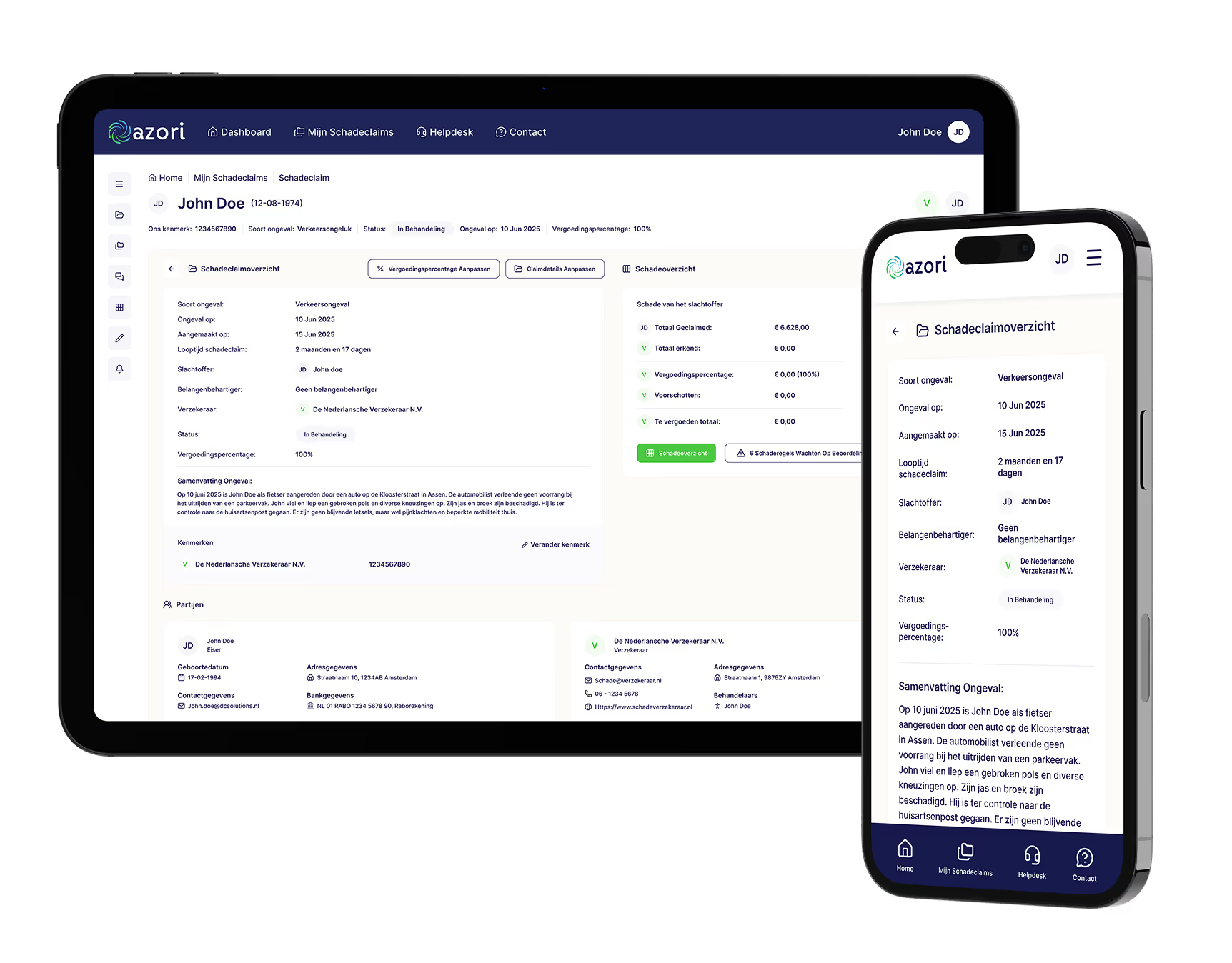
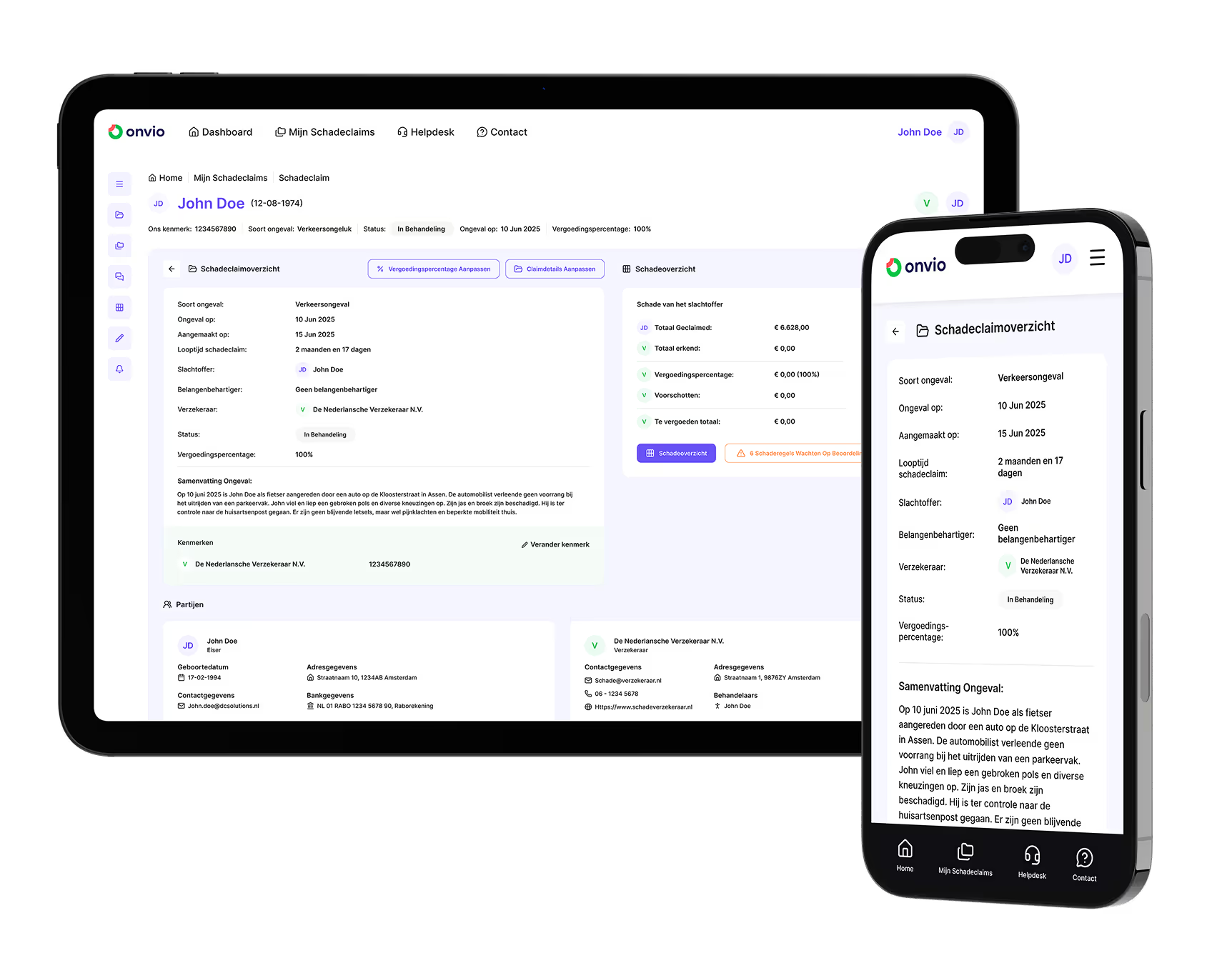
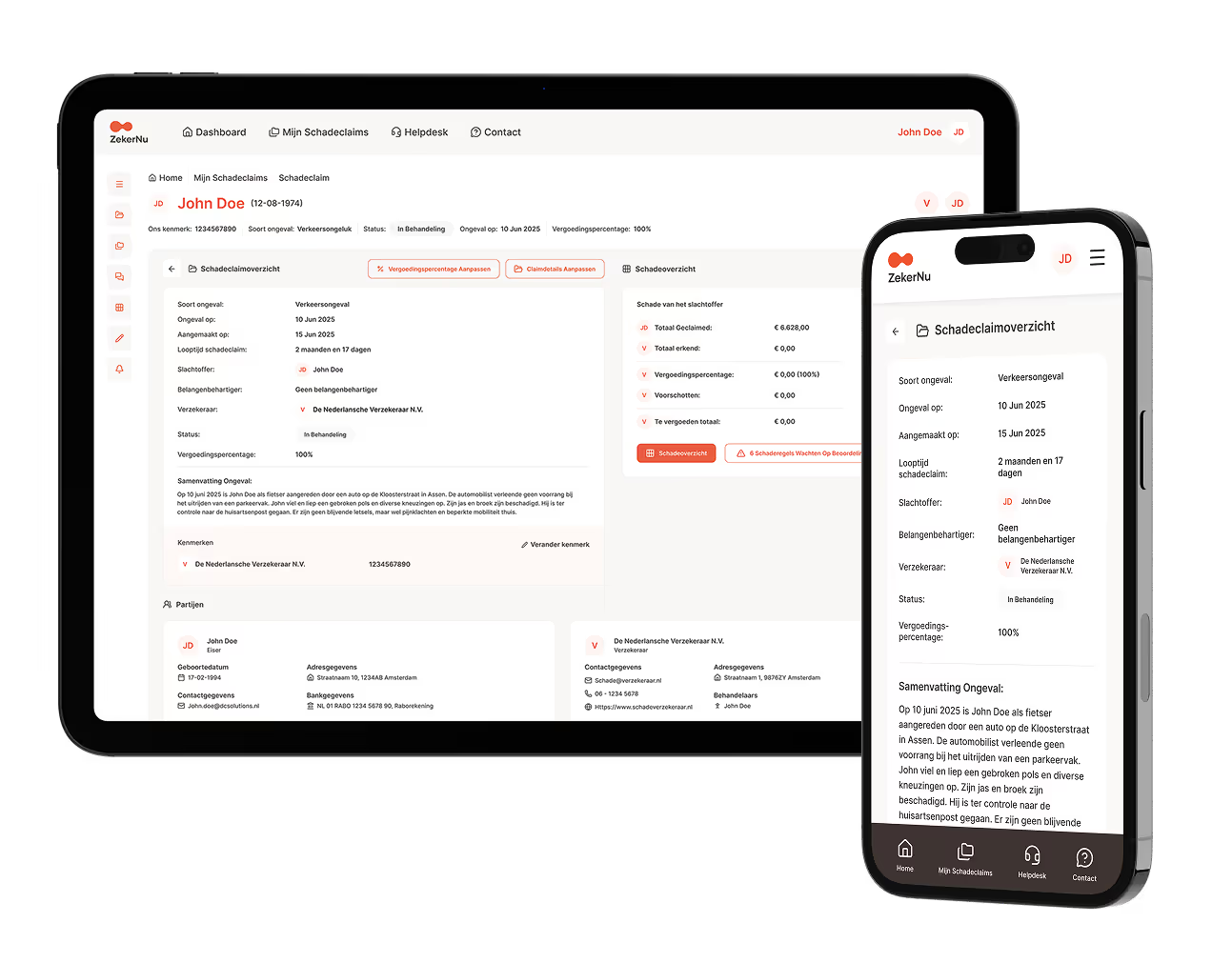

The same accident, two very different journeys
-
The vehicle
Driver, repairer, engineer and lease contract. Fast, measured, largely automated, with cost and cycle time as a benchmark. Shared platforms have existed here for twenty years.
-
The person
Claimant, solicitor, medical expert and insurer. Slow, expensive, by email and phone. No shared file, no benchmark, no automation. Most of the cost and the least data.
-
One ecosystem
Your platform on the vehicle or policy side, Claim360 on the personal injury side. Both exchange facts and status, so lessor, insurer and driver see the whole claim.
How Claim360 enriches your platform
-
The injury file hangs on your claim
The injury flag in your platform opens the file in Claim360, with the facts, parties and documents that already exist. Nothing is retyped.
-
Your customers see the whole claim
Reserve, milestones and closure of the injury file come back into your platform. The fleet manager or the handler sees the whole accident, not just the vehicle.
-
Your system remains the system of record
Claim360 is headless and sits under your front end or next to your core system. No rip-and-replace, no second truth.
-
Your AI reads the injury file too
Through the MCP gateway your model gets the structured file, with the same permissions as the user. Your model on the vehicle, ours or the customer's on the injury; both read the same facts.
A handover, not an integration project
Four events and one data contract. Indicative; the event model is the first thing we work out together.
-
Injury flag in your platform
The driver's or handler's notification flags injury. Your platform keeps the vehicle file.
-
Claim360 opens the injury file
Facts of the accident, parties, photos and policy data come in through API or MCP. One source of truth.
-
Parties get access through Azori
Claimant, solicitor, medical expert and outsourcing partner each see their part, in the customer's brand.
-
Status and costs come back
Reserve, milestones and closure go back to your platform and the core system. ISO 27001 on both sides, permissions per role, audit trail, hosting in the Netherlands, within the EU.
You sell to the lessor or the policy, we to the risk carrier
The accident is the only thing we share.
-
Object of the claim
You: the vehicle or the policy. Claim360: the person, with injury, loss of income, care and liability.
-
Who pays
You: lessors, captives, fleets, insurers. Claim360: insurers and their personal injury departments, and the outsourcing partners.
-
Connected parties
You: drivers, repairers, engineers, brokers. Claim360: claimants, solicitors, medical experts, rehabilitation, outsourcing partners.
-
Automation
You: touchless where possible. Claim360: first the structured file, then AI through MCP; the handler sets the limits and decides beyond them.
-
Architecture
You: standalone or next to the core system. Claim360: headless orchestration layer over any core system or portal.
One accident, twenty-seven rulebooks, no shared file
The vehicle side standardised twenty years ago. The person side never did.
-
Few files, most of the money
Motor is the largest claims line in Europe. Injury is a small share of the claims in number and the largest share of the cost, reserves and litigation.
-
The law is national
Heads of damage, tariffs, limitation and medical assessment differ per country. Rome II applies the law of the country of the accident, not of the fleet.
-
Cross-border by design
Lease fleets cross borders daily. The Motor Insurance Directive requires a claims representative in every member state and a reasoned reply within three months.
-
No shared platform
Insurers, captives and international claims handlers each work in their own system. For the vehicle there are shared platforms; for the person there is nothing comparable.
Frequently asked questions from platforms and system vendors
Is your question not here?
Does Claim360 replace our platform or core system?
No. Claim360 connects what is there. Your platform keeps the vehicle or policy file and remains the system of record; Claim360 adds the shared injury file, the workflow and the access for the chain.
How do the two sides exchange data?
Through API or MCP, in four events: the injury flag, opening the injury file with the facts and parties, the access for the parties, and status and costs back. The event model and the data contract are the first thing we work out together.
Who is the customer?
You sell to the lessor, the captive or the insurer on the policy side; we to the risk carrier and its personal injury department. A joint customer sees the whole accident in one place.
Does this also work across borders?
The law differs per country, the mechanism does not. Claim360 is built on the European rules (GDPR, AI Act, Motor Insurance Directive) and runs today in the Netherlands and Belgium.
A half-day working session
Both product teams at the table, one accident with injury from start to finish through your platform and Claim360. Then we know whether it fits, and what the event model should be.