Built to fail: looking back at KubeCon 2026
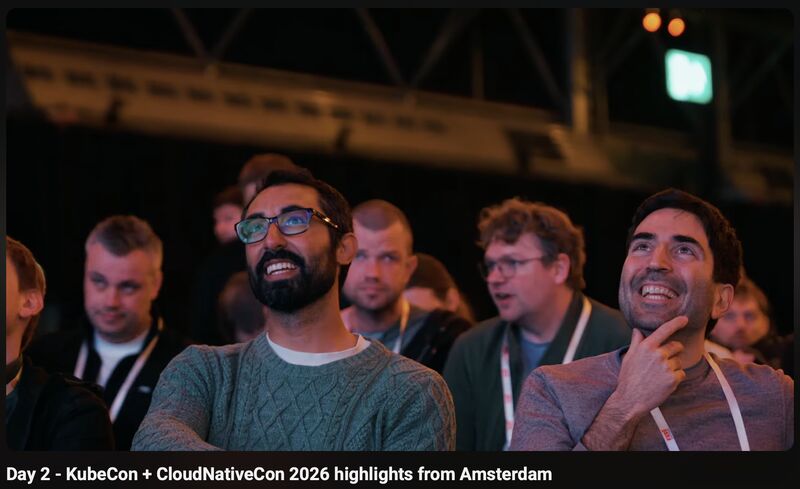

Last week, part of our team was at the RAI for KubeCon + CloudNativeCon 2026. Thirteen thousand engineers from all over the world, one shared assumption: software that really matters to customers is software that assumes something, somewhere, will break.
At DCSolutions we call that 'built to fail'. It sounds like a contradiction, so let us first explain what it does and does not mean.
The starting point
Traditional software is built on the assumption that everything keeps working. Database is up. Server is running. Network is on. When something does go wrong (and somewhere, at some point, it always does), the problem becomes big. An outage halfway through a claims process. A slow portal on a busy Tuesday. A lost submission because a component freezes.
Built to fail turns that assumption around. The platform assumes that something, somewhere, will break, and is designed for it. Multiple copies of every component. Automatic restart on failure. Load distribution that adapts when one node drops out. The system keeps running while parts of it do not.
The technology that makes this possible is Kubernetes, and the broader cloud native ecosystem around it. That is what KubeCon was about.
Three observations from the RAI
Cloud native is no longer a niche. Banks, telecoms, governments and large retailers all run critical workloads on it. What was experimental ten years ago is now the way serious software is built. And not just by us.
The ecosystem is mature. The tooling around monitoring, security, deployment and data management is in place. For a platform provider, that means building less yourself and combining more components validated by thousands of engineers worldwide. That is not only more efficient, it is also safer.
Compliance got a lot of attention. The governance requirements insurers have to deal with (DORA, NIS2, AI Act) were emphatically present at KubeCon. The native tools for audit logging, secret management and data residency you need for this regulation are part of the stack we build on. That is no coincidence.
(Side note: three colleagues appeared in the official aftermovie of day 2, around 0:43. We are a little proud of that.)
What this means for non-life insurers
A claims platform must not be down. Not half down. Not 'just for a moment'. A claimant trying to submit information after a collision on a Saturday evening expects it to work. A claims handler retrieving files on Monday morning expects them to be there. A chain partner who needs to validate a document expects a response within seconds.
Against that stand three concrete properties of our architecture.
Indestructible reliability.
If a component fails, another one takes over the same work immediately. The end user notices nothing. No lengthy procedure, no manual intervention, no support tickets to get things running again.
Scalability that breathes with you.
A quiet Sunday or a peak from a storm front with hundreds of notifications at once: the platform scales automatically with the load. No manual capacity planning. No performance issues at the wrong moment.
Guaranteed continuity.
Automated recovery, automatic backups, monitoring that flags anomalies before a user is affected. Part of the base design, not a module you tick separately.
Not a migration project, a layer on top
What we do not do: force an insurer into a long, expensive migration away from existing systems. Projects like that rarely end well, and in most cases they are not necessary either.
What we do: place a smart layer on top of the existing infrastructure that connects the chain and structures the data. On the Axon side, Axon stays in place. On the claims handler side, the system that is there stays. In between runs the composable claims platform that handles the communication, orchestrates the workflows and records the data for later analysis and compliance testing.
That platform runs on the architecture KubeCon confirmed once again last week as the standard. A platform that simply works. Always. Because it is built to absorb every blow.
Insurers who want to know more can book a conversation via the button below. One intake, one technical walkthrough. After that you know exactly how it works, and what it means for your chain.